

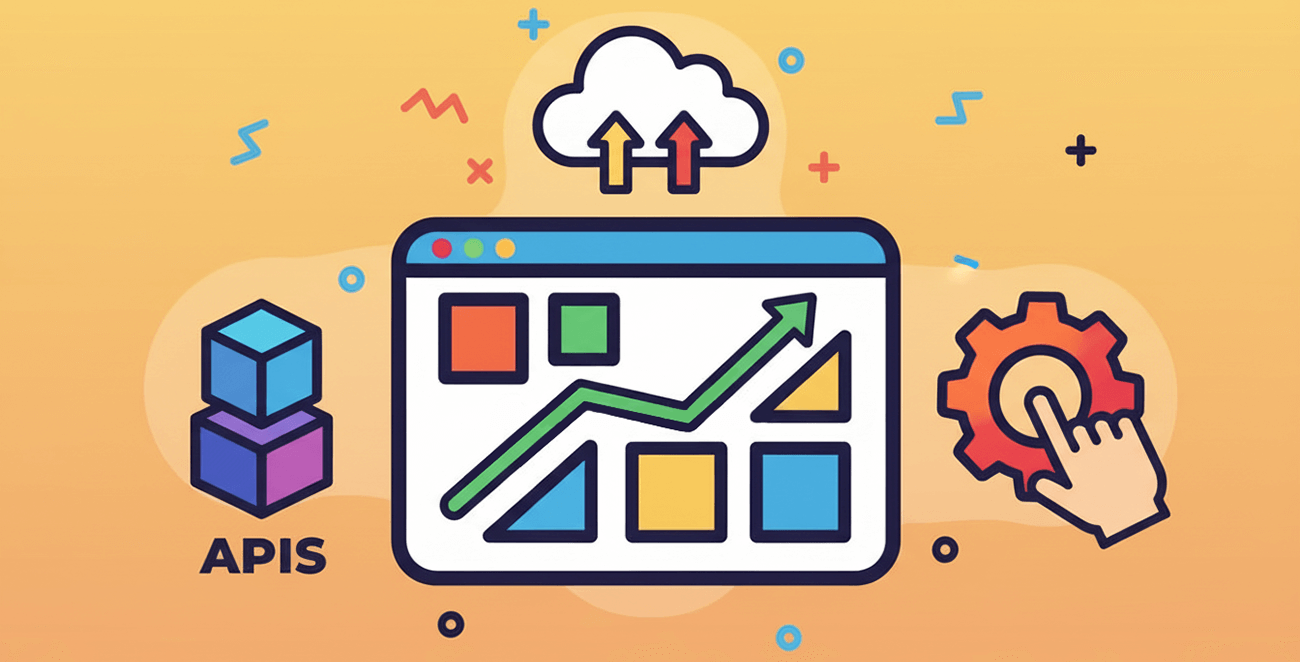
Businesses today scale at speeds that were unimaginable only a few years ago. New markets open overnight. Product lines evolve every quarter. Customer expectations shift weekly. In this environment, the technical foundation of a company — its web infrastructure, integrations, performance, and architecture — becomes a decisive advantage.
Web development is no longer a back-office function. It is a strategic engine that determines whether a brand can scale with confidence or collapse under its own digital weight. The companies winning in 2025 are the ones taking a proactive, systems-led approach to development: modular, automated, API-driven, and relentlessly user-focused.
This article explores the most influential trends shaping modern web development and how organizations can leverage them to build stronger digital experiences, increase operational efficiency, and accelerate growth.
The Shift From Websites to Web Systems
Historically, businesses treated their websites as static destinations — digital brochures. But modern organizations operate in dynamic ecosystems. They require modular tools, integrative interfaces, and systems that scale without sacrificing performance.
Today’s websites function more like platforms:
- They integrate with CRMs and ERPs.
- They automate data workflows.
- They sync with mobile apps.
- They handle real-time interactions.
- They connect with artificial intelligence models.
This shift marks the evolution from “web presence” to “web infrastructure.” Companies building with this mindset are better positioned to launch faster, adapt quicker, and scale without friction.
Trend 1: API-Driven Ecosystems
APIs have become the connective tissue of modern digital architecture. Instead of building monolithic systems, companies are adopting modular, composable stacks — enabling each component to evolve independently.
Why APIs matter:
- Faster integrations
- Cleaner data flow
- Modular scalability
- Lower long-term maintenance
- Ability to connect cloud tools seamlessly
API-led development allows organizations to adapt to new tools without rebuilding their entire ecosystem. It keeps businesses agile while ensuring technical sustainability.
Trend 2: The Rise of Headless Architecture
Headless architecture separates the front-end presentation layer from the back-end content and logic. This separation unlocks flexibility across devices and channels.
Key benefits:
- Faster performance
- Freedom to redesign the front-end without touching the back-end
- Multi-platform content delivery
- Better developer workflows
- Scalability for larger content ecosystems
Brands using headless systems deliver consistent experiences across web apps, mobile apps, digital kiosks, and even emerging interfaces like VR.
Trend 3: Automation & Developer Efficiency
Developer resources are expensive, and the need for rapid iteration is constant. Automation is now essential.
Modern teams automate:
- Testing
- Deployment pipelines
- Code formatting
- Accessibility checks
- Backups and health monitoring
CI/CD (Continuous Integration / Continuous Deployment) has become a standard in high-performing organizations. It reduces human error, increases release frequency, and creates resilience within engineering teams.
Trend 4: AI-Powered Development
AI is transforming the development lifecycle. From debugging to code suggestions to automating documentation, AI tools significantly increase developer productivity.
AI enhances:
- Code quality
- Speed of delivery
- Predictive problem detection
- Testing coverage
- Refactoring outdated codebases
Leading companies are not replacing developers with AI. They are augmenting developers, enabling teams to focus on architecture, strategic decisions, and complex engineering challenges.
Trend 5: Performance as a Ranking Factor
Speed is no longer a bonus — it’s a requirement. Poor performance directly affects revenue, retention, and search visibility.
Performance influences:
- Bounce rates
- Conversion rates
- User satisfaction
- Accessibility
- SEO rankings
Google’s Core Web Vitals have made load speed, interactivity, and stability essential metrics. A slow site is a competitive liability.
Trend 6: Security-First Development
Cybersecurity threats have escalated globally. Companies now face risks ranging from data breaches to ransomware attacks. Development teams are shifting from reactive fixes to a proactive, security-first mindset.
Modern practices include:
- Zero-trust architecture
- Automated vulnerability scanning
- Hardened authentication flows
- Secure API communication
- Regular penetration testing
Security can no longer be an afterthought — it’s a foundational component of trust and reputation.
Trend 7: Progressive Web Apps (PWAs)
PWAs combine the best of websites and mobile apps. They load fast, work offline, and install on devices like native apps — without the need for app stores.
Benefits of PWAs:
- Higher engagement
- Faster performance
- Lower development cost than native apps
- Consistent cross-device experience
They provide a scalable middle-ground for businesses that need “app-like” performance without building full native applications.
Trend 8: Component-Based Front-End Development
Frameworks like React, Vue, and Svelte have transformed how front-end teams build interfaces. Component-driven development enables consistent UI, faster iteration, and reusable structures.
Why components matter:
- Reduced development time
- Less code duplication
- Consistent design
- Easier collaboration
- Faster testing & QA
This shift makes design and development deeply interconnected — especially when paired with mature design systems.
Trend 9: Cloud-Native Development
As businesses grow, they need environments that can scale globally and automatically. Cloud-native architecture provides this flexibility.
Cloud-native systems:
- Use scalable hosting
- Offer microservices architecture
- Improve uptime
- Reduce server costs
- Enable edge deployment for ultra-fast speed
This is the infrastructure behind enterprise-grade digital experiences.
Trend 10: The Fusion of Design & Development
Perhaps the most transformative trend is the shrinking gap between design and engineering. Collaboration is now foundational.
This fusion creates:
- Better product alignment
- Faster production cycles
- More refined digital experiences
- Consistency across platforms
Tools like Figma, Storybook, and component libraries ensure designers and developers work with shared logic and shared language. Companies embracing this are building more coherent, scalable, and delightful digital experiences.
Scaling Through Web Development: A Strategic Advantage
Strong development practices compound over time. They reduce operational drag, increase speed to market, strengthen digital resilience, and improve customer experience.
A company with modern development infrastructure can:
- Launch products quickly
- Adapt to new opportunities
- Outperform competitors with better UX
- Maintain lower technical debt
- Improve long-term cost efficiency
Development isn’t siloed — it amplifies every function.
Final Thoughts: Development as a Growth Engine
Web development is now a strategic pillar of business growth. It influences brand perception, operational efficiency, product innovation, and customer satisfaction. Companies that treat development as a long-term investment — not a short-term cost — build the technical foundation needed to scale confidently into the future.
The organizations thriving in 2025 share a common trait:
They use development as a catalyst for innovation, speed, and competitive advantage.
Your growth potential is directly tied to the strength of your digital infrastructure.