

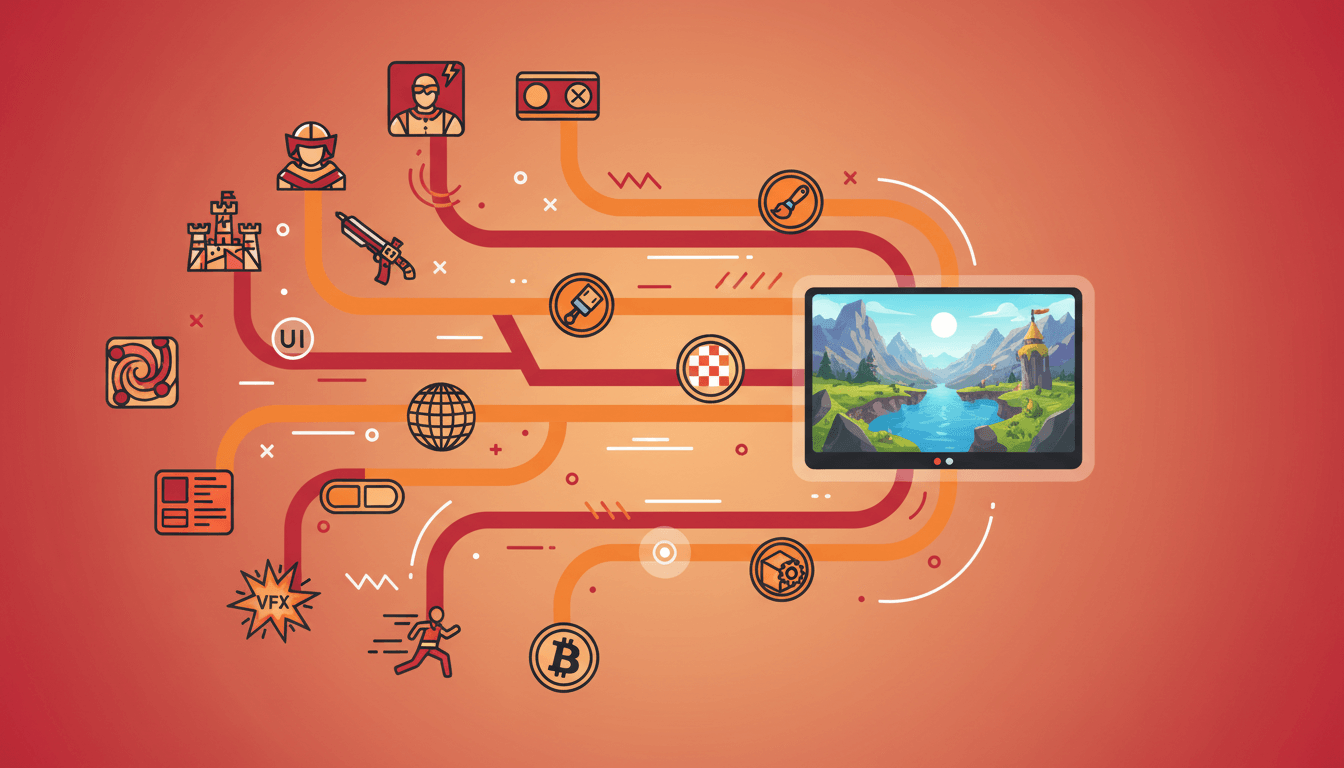
Games have become one of the most powerful entertainment mediums in the world — and at the heart of every memorable title lies the artistry of asset creation. Characters, environments, props, UI elements, textures, visual effects, and animations all come together to shape player immersion. Unlike traditional media, games demand a world that feels alive, functional, and emotionally resonant.
In 2025, game asset creation is no longer a purely artistic exercise. It is a fusion of art direction, technical precision, pipeline optimization, and cross-disciplinary collaboration. The studios that understand this intersection consistently deliver higher quality, faster production cycles, and player experiences that feel unforgettable.
This article explores why game asset creation is foundational to immersive design, how modern pipelines operate, and what production frameworks enable world-class results.
Why Game Assets Matter More Than Ever
Immersion is the currency of modern gaming. Players expect worlds that feel coherent, expressive, and technically seamless. Assets create that experience.
Strong assets define:
- Visual identity — how the game feels and looks
- World-building depth — how believable the environment is
- Gameplay clarity — how readable interactions are
- Emotional resonance — how characters connect with players
- Performance — how well the game runs across devices
Players don’t always notice great assets, but they instantly notice when assets break consistency or immersion. Asset quality is inseparable from player satisfaction.
The Game Asset Pipeline: An Overview
Game asset production is a multi-stage process that moves from vision to execution through structured collaboration. While pipelines vary by studio and engine, the core workflow typically includes:
- Concept Art
- Modeling (2D/3D)
- UV Mapping & Retopology
- Texturing & Materials
- Rigging (for characters)
- Animation
- VFX & Shader Work
- Integration into the Engine
- Optimization & Testing
A strong pipeline ensures assets are visually aligned, technically optimized, and ready for real-time performance.
1. Concept Art: Creating the Visual Blueprint
Concept art is the foundational stage. It defines the tone, style, silhouette, and emotional direction of assets.
High-quality concept art clarifies:
- Character identity and personality
- Environmental storytelling
- Prop functionality
- Color language and style cohesion
Strong concept direction accelerates production and prevents costly revisions later. It is the north star guiding the asset pipeline.
2. Modeling: Transforming Ideas Into Form
Modeling brings concept art into dimensional reality.
For 3D assets:
Artists sculpt or model characters, props, and environments using tools like Blender, Maya, or ZBrush. They consider topology, silhouette readability, animation needs, and engine constraints.
For 2D assets:
The focus shifts to shape language, readability, and stylization.
Regardless of medium, modeling is where artistic intuition meets technical precision.
3. UV Mapping & Retopology: Preparing Assets for Texture
These technical steps ensure assets behave correctly inside a game engine.
- UV Mapping unfolds the model for texturing.
- Retopology optimizes the model’s polygon flow for performance.
Games must run in real time, which means artists must balance visual fidelity with performance constraints.
4. Texturing & Materials: Adding Life and Believability
Textures and materials define how assets interact with light.
Artists use:
- PBR workflows
- Hand-painted textures
- Stylized shading techniques
Texture work determines emotional tone — gritty, vibrant, realistic, or painterly. This phase bridges art style and immersive experience.
5. Rigging: Preparing Characters for Movement
Character rigs function like digital skeletons. Rigging determines how characters bend, stretch, emote, and interact.
A clean rig:
- Supports believable animation
- Enhances player connection
- Prevents clipping and deformation issues
This stage influences both aesthetics and gameplay feel.
6. Animation: Bringing Assets to Life
Animation is the heartbeat of game assets.
Animators craft:
- Combat systems
- Movement cycles
- Facial expressions
- Environmental loops
- Interaction cues
Animation shapes emotion, timing, and player feedback — essential components of gameplay clarity and immersion.
7. Visual Effects (VFX) & Shaders
VFX define atmosphere and impact. They include:
- Magic abilities
- Explosions
- Weather systems
- UI motion
- Environmental loops
Shader artists control how materials react in real time, from metallic sheen to soft translucency. These technical-art roles elevate visual identity and elevate immersion.
8. Engine Integration: Making Assets Playable
Assets must be imported into engines like Unity or Unreal, where they are configured with:
- Colliders
- Materials
- Particle systems
- Animation controllers
- LODs (Level of Detail models)
This step ensures that assets function correctly in gameplay conditions.
9. Optimization: Ensuring Performance at Scale
Games run on diverse hardware: consoles, PCs, mobile, cloud streaming. Optimization is essential.
Team targets:
- Frame rate stability
- Polycount budgets
- Texture memory limits
- Efficient shaders
- Real-time lighting constraints
Well-optimized assets feel smooth and responsive across all platforms.
Why Asset Consistency Defines Player Experience
The most immersive games maintain consistent:
- Lighting language
- Shape vocabulary
- Animation style
- Color palette
- Scale and proportions
When assets follow a unified style, the world feels believable. When they don’t, immersion breaks immediately.
Consistency creates the emotional rhythm of gameplay.
Art Direction: The North Star of Asset Production
Asset creation is not just execution — it is interpretation of the brand’s art direction. Clarity in art direction accelerates production and reduces revision cycles.
Strong art direction documents:
- Style rules
- Proportional systems
- Texture treatment
- Color logic
- Animation tone
- Narrative context
This ensures that every asset, regardless of artist, fits into the same universe.
Why Professional Asset Creation Improves Production Efficiency
Studios that invest in skilled asset creation save enormous time, cost, and frustration.
Benefits include:
- Faster iteration
- Fewer revisions
- Higher team morale
- Improved performance
- Stronger player experience
- Reliable scalability
High-quality assets reduce downstream issues, especially during integration and optimization.
The Strategic Advantage of High-Quality Assets
1. Higher Player Engagement
Immersive assets keep players inside the world longer.
2. Stronger Brand Identity
Your visual universe becomes recognizable and iconic.
3. Faster Content Production
A well-built pipeline scales with expanding content.
4. Better Technical Performance
Optimized assets improve FPS, loading, and responsiveness.
5. Enhanced Monetization Opportunities
Skin packs, DLCs, cosmetic upgrades, and expansions all rely on compelling asset design.
The Future of Game Asset Creation
In 2025 and beyond, game asset production continues to evolve through:
- AI-assisted workflows
- Procedural generation
- Real-time rendering pipelines
- Virtual production tools
- Cross-platform asset libraries
These innovations streamline production but do not replace creative vision. The most successful studios will pair emerging technology with strong art direction, human creativity, and disciplined pipelines.
Final Thoughts: Asset Creation as the Foundation of Immersion
Game asset creation is the backbone of player experience. It defines the emotional resonance, visual identity, performance, and storytelling potential of a game. When executed strategically, asset creation becomes a competitive advantage — enabling richer worlds, more engaged players, and scalable production.
Immersive games aren’t built by accident. They’re sculpted asset by asset, decision by decision, with relentless intention.